

Step-by-Step Gun Dog Summer Heat Protection Guide: What Every Gun Dog Handler Must Know Before It's Too Late.
- Kirsten Oelrich
- May 11
- 10 min read

Updated: May 20

Featured products: K9Athlete Hydrate & Recover, M!GO Bottle, and Black Mesa Gear MiGO Water Bottle & Holder Set
Explore this Guide: Step-by-Step Gun Dog Summer Heat Protection Guide: What Every Gun Dog Handler Must Know Before It's Too Late.
What Every Gun Dog Handler Must Know Before It's Too Late starts with a simple rule: prevent heat stress before your gun dog shows symptoms. Handlers should carry water, offer short cooling breaks, use shade, monitor gums and behavior, avoid peak heat, and support hydration before, during, and after training. Summer heat protection for gun dogs is not just a comfort issue; it is a field-readiness and safety plan that helps serious handlers protect the dog, the hunt, and the season.
Why Summer Heat Is Different for Working Gun Dogs
A gun dog does not work like a casual pet taking a short walk around the block. A driven pointer, retriever, spaniel, or versatile hunting dog can run hard through grass, mud, timber, water, and uneven ground while mentally locked onto birds, bumpers, scent, or a handler's command. That intensity is exactly why summer conditioning can be valuable, but it is also why heat protection has to be planned before the truck door opens.
Dogs cool themselves differently than people. They rely heavily on panting, limited sweating through the paw pads, and behavioral cooling such as seeking shade or water. A high-drive gun dog may ignore early discomfort because the job is more exciting than rest. By the time the dog looks obviously weak, confused, or unstable, the handler may already be behind. That is why the safest summer training plan is proactive, not reactive.
The goal is not to stop summer work altogether. The goal is to build a repeatable routine that keeps the dog safe while supporting fitness, focus, and recovery. Heat risk rises with humidity, direct sun, dark coats, poor air movement, hard exertion, warm vehicle interiors, and limited access to water. When several of those factors stack together, even a short session can become too much.
Field Mindset
Think like a handler before you think like a trainer. Every session should answer three questions: How hot is it? Where is the nearest shade and water? How will I stop before the dog is in trouble? A good summer plan includes hydration gear, a cooling strategy, a shorter training objective, and a clear stop point. The best handlers do not wait for a dog to fail in the heat. They end the drill while the dog is still strong, responsive, and recovering well.

Step 1: Build a Pre-Training Heat Check
Before you load gear, look at the whole environment. The temperature alone does not tell the full story. Humidity makes panting less effective. Wind can help cool the dog, while still air makes heat feel heavier. Tall grass can trap heat near the dog. Gravel, asphalt, and truck beds can radiate heat into paws and the body. If the ground is too hot for your bare hand, it is too hot for casual paw contact.
Set a summer threshold for your own kennel. Some handlers may train very early in the morning and stop before the sun gets strong. Others may move conditioning to water work, shaded obedience, or short technical drills. In hot weather, the session goal should be tighter: one clean handling pattern, a few controlled retrieves, one short obedience lesson, or a confidence-building drill. Long reps and ego-driven pushing do not belong in summer heat.
· Train early, ideally before the day reaches peak heat.
· Choose shade, mowed ground, safe water access, or short drill fields.
· Keep the dog out of hot vehicles except for brief, ventilated transitions.
· Use shorter retrieves, longer rest intervals, and fewer total repetitions.
· Bring more water than you think you need for both handler and dog.
Step 2: Hydrate Before the Dog Is Thirsty
Hydration should start before the first cast, heel command, or retrieve. Many working dogs will drink more reliably when hydration is part of the routine instead of something offered only after heavy panting. This is where K9Athlete Hydrate & Recover can fit into a serious handler's summer system. Black Mesa Gun Dog Supply lists it as a daily electrolyte supplement designed for active working dogs that need help supporting water intake, electrolyte balance, and recovery after demanding conditions.
The product page notes that K9Athlete Hydrate & Recover includes electrolytes such as potassium, sodium, and chloride, along with amino acids including L-glutamine and L-leucine. It is intended to encourage drinking and support dogs after strenuous activity. For summer use, that makes it a practical part of the plan, especially when a dog needs routine hydration support during warm-weather conditioning, travel days, field trial preparation, or preseason work.
Always follow label directions. Black Mesa Gun Dog Supply lists usage as one scoop per pint of water, with a maximum of three servings per day, while still providing access to plain fresh water, shade, and rest. Supplements do not replace smart handling. They are tools that work best when paired with conservative training decisions and close observation.
Hydration Routine
Offer water before training starts, not just after the dog is hot.
Use a measured hydration plan when adding K9Athlete Hydrate & Recover.
Carry plain fresh water separately so the dog always has a choice.
Pause between drills and encourage small drinks instead of one large gulp after exhaustion.
Watch the dog after drinking. Recovery behavior matters as much as intake.
Step 3: Carry Water Where You Can Reach It
The best hydration plan fails if the water is back at the truck when the dog needs it in the field. The M!GO Bottle gives handlers a lightweight, reusable, field-friendly option for carrying water on summer training days. Black Mesa Gun Dog Supply describes the bottle as a squeezable LDPE bottle with a dual-cap setup, compatible with common filters, built without BPA, PFAS, or PVC, and light enough to pack in a vest or bag.
For gun dog work, the real advantage is accessibility. A water bottle that can be filled, squeezed, cleaned, carried, and used quickly is more likely to become part of your routine. The M!GO Bottle is designed with a wide-mouth cap option for filling and cleaning and a narrow-mouth cap option for everyday sipping and filter compatibility. That makes it a useful hydration piece for handlers who train in warmer months, travel to testing events, run dogs from the truck, or spend long days moving across cover.
A handler should carry water for two jobs: drinking and cooling. Drinking supports internal hydration. Cooling water may be used carefully on paws, belly, inner thighs, or the body when appropriate, especially during breaks. Avoid ice-cold shock approaches and focus on shade, airflow, rest, and controlled cooling. The goal is steady support, not panic response.
Step 4: Use a Modular Carry System for Real Field Conditions
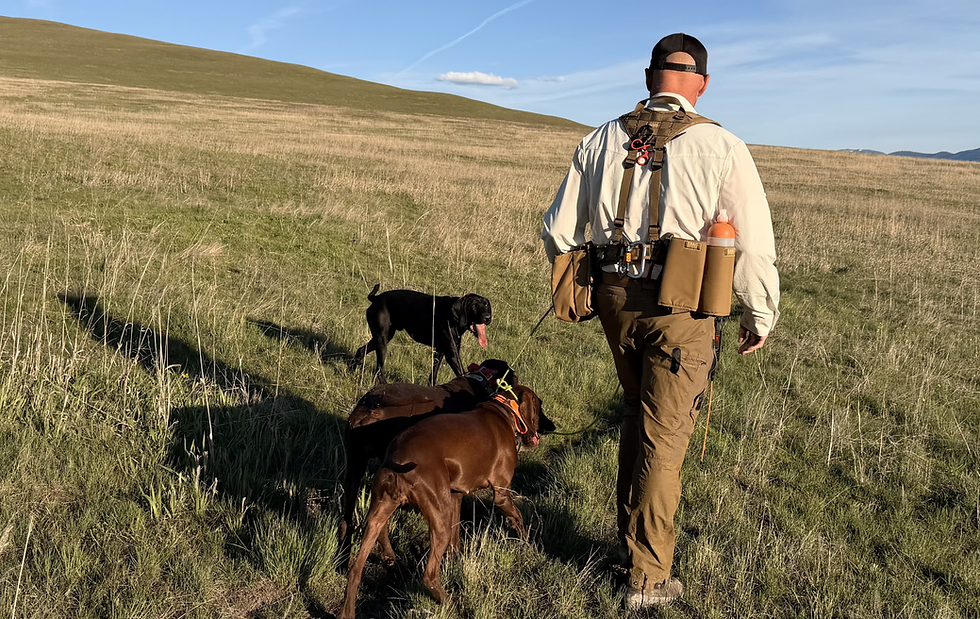
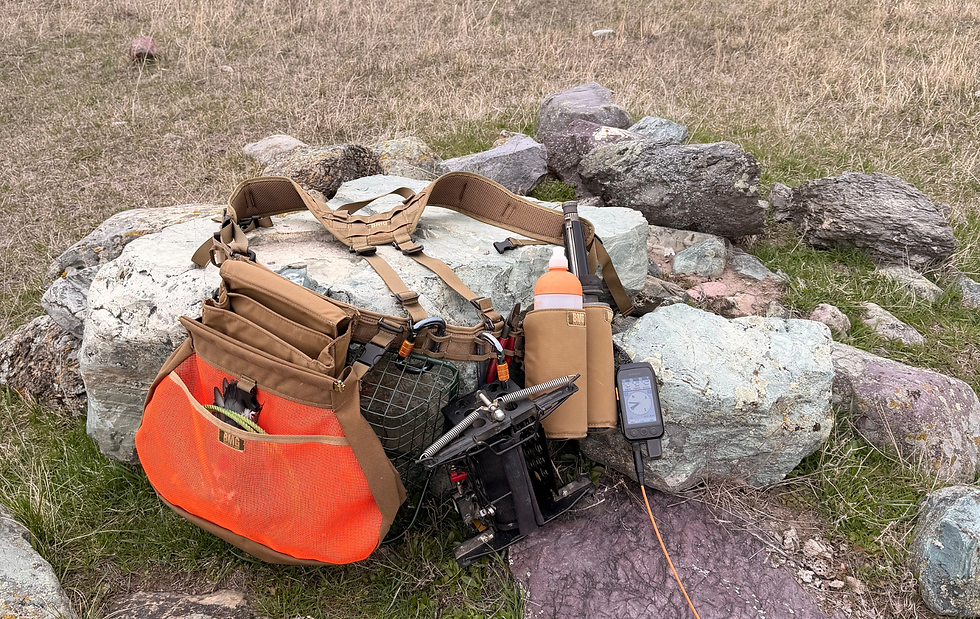
The Black Mesa Gear MiGO Water Bottle & Holder Set is built for handlers who want hydration integrated into their field setup instead of buried in a pack. Black Mesa Gun Dog Supply describes the set as including two MiGO Water Bottles and two Black Mesa Gear Water Bottle Holders, designed for the Uplander Extreme Modular Hunting Vest System and other MOLLE-compatible setups. That matters because balance and reach can make the difference between actually using water and leaving it untouched.
Hydration carry should be balanced, secure, and easy to access while moving. A modular holder lets the handler position water where it works with the vest, belt, dog lead, e-collar transmitter, shells, bumpers, first aid kit, or bird bag. In summer, that organization matters. When the dog needs a break, you should not have to dig through layers of gear to find a bottle.
The Black Mesa Gear system also aligns with a broader field philosophy: gear should work hard, stay practical, and support long days behind dogs. For upland hunters, bird dog trainers, and serious outdoorsmen, a hydration setup should be built for brush, mud, heat, repetitive use, and real movement. Summer work is not the time for fragile gear or awkward carry systems.
What to Pack
· K9Athlete Hydrate & Recover for measured electrolyte support when appropriate.
· M!GO Bottle for lightweight, reusable water carry.
· Black Mesa Gear MiGO Water Bottle & Holder Set for secure modular access.
· Plain fresh water for the dog, the handler, and cooling breaks.
· A collapsible bowl or controlled pour method for clean drinking breaks.
· A basic K9 first aid kit and a plan for fast veterinary care if needed.

Step 5: Read the Dog, Not the Schedule
A training calendar is helpful, but the dog in front of you gets the final vote. Some days are too hot for the plan you wrote. Some dogs recover quickly, while others need more time. Age, coat type, weight, conditioning level, prior illness, travel stress, and drive level all affect heat tolerance. A hard-charging dog may look impressive until the recovery window starts to stretch longer than normal.
Watch for excessive panting that does not settle with rest, glazed eyes, wobbling, weakness, confusion, red or pale gums, vomiting, diarrhea, refusal to move, collapse, or behavior that feels wrong for that dog. These are not training problems. They are stop signals. Move to shade, begin controlled cooling, offer water if the dog can drink safely, and seek veterinary help when signs are serious or do not improve quickly.
The best summer handlers learn their dogs' normal recovery patterns. How long does the dog pant after two short retrieves in mild weather? How quickly does focus return after water? Does the dog seek shade or try to keep running? Those details help you notice trouble sooner.

Step 6: Cool Down With Purpose
The cool-down is part of the training session. Do not run the dog hard, load up immediately, and drive away without checking recovery. After work, move to shade, let breathing slow, offer water in small amounts, and keep airflow moving. A dog that is still heavily panting should not be placed in a hot crate or parked vehicle without proper ventilation and monitoring.
K9Athlete Hydrate & Recover can be used as part of the after-work routine according to label instructions, especially when the day includes demanding activity. The M!GO Bottle and holder setup make it easier to keep that routine consistent because the water is already with you. Consistency is what protects dogs. One careful day is good. A repeatable system is better.
Safe Session Formula
Start early and choose a realistic heat-safe objective.
Hydrate before the first drill.
Work in short blocks with shade breaks.
Offer water repeatedly and monitor recovery.
Stop while the dog is still performing well.
Cool down before loading, feeding, or traveling.
About Black Mesa Gun Dog Supply
Black Mesa Gun Dog Supply is an online-only, veteran-owned and women-led source for premium gun dog gear, field-tested equipment, training supplies, and performance products for serious hunters and handlers. The company focuses on practical gear for people who actually work dogs in the field, including upland hunters, waterfowl hunters, NAVHDA handlers, NSTRA competitors, AKC participants, and everyday trainers who want reliable equipment.
The Black Mesa approach is simple: carry what works, explain why it matters, and help handlers make better field decisions. From hydration and recovery support to modular Black Mesa Gear, Garmin tracking and training systems, first aid, kennels, and dog training essentials, the store is built around the needs of working dogs and the people responsible for them.
Featured Hydration Products for Summer Field Work
K9Athlete Hydrate & Recover: Use this as a hydration and recovery support product for active dogs when label directions fit your plan. It is especially relevant for warm-weather training, travel, preseason conditioning, and dogs that benefit from encouraged water intake.

M!GO Bottle: Use this lightweight, reusable bottle to keep water close in the truck, vest, pack, or field bag. The dual-cap design and squeezable body make it practical for handlers who need quick hydration access.

Black Mesa Gear MiGO Water Bottle & Holder Set: Use this modular two-bottle, two-holder system when you want hydration attached to your MOLLE-compatible setup or Black Mesa Gear Uplander Extreme Modular Hunting Vest System. It keeps water accessible and balanced during real field movement.
Next steps: Putting your Step-by-Step Gun Dog Summer Heat Protection Guide: What Every Gun Dog Handler Must Know Before It's Too Late into practice.
Shop Hydration at Black Mesa Gun Dog Supply: https://www.blackmesagundogsupply.com/gun-dog-essentials
Shop K9Athlete Hydrate & Recover: https://www.blackmesagundogsupply.com/product-page/k9athlete-hydrate-recover
Shop the M!GO Bottle: https://www.blackmesagundogsupply.com/product-page/migo-bottle
Shop the Black Mesa Gear MiGO Water Bottle & Holder Set: https://www.blackmesagundogsupply.com/product-page/black-mesa-gear-migo-water-bottle-holder-set
Build a summer field hydration kit before your next training session.
Review your training schedule and move the hardest work to cooler hours.
FAQ
How often should I offer water during summer gun dog training?
Offer water before training starts, during every rest break, and after the session. Short, repeated drinking opportunities are usually better than waiting until the dog is heavily overheated or exhausted.
Can K9Athlete Hydrate & Recover replace plain water?
No. It should be used according to label directions as part of a hydration routine, while plain fresh water should always remain available. Hydration products are support tools, not replacements for rest, shade, water, and good judgment.
Is the M!GO Bottle useful for both handlers and dogs?
Yes. The bottle is designed as a lightweight, reusable hydration option for outdoor use. Handlers can carry it for their own drinking water, field refills, or controlled water breaks for dogs.
Why use a water bottle holder instead of keeping bottles in the truck?
Summer heat problems can develop away from the truck. A holder keeps water accessible on the move, which makes it easier to stop early, offer water, and cool the dog before a small problem becomes urgent.
What are early signs that my dog is getting too hot?
Watch for panting that does not settle, weakness, stumbling, confusion, unusual gum color, vomiting, diarrhea, refusal to continue, or any behavior that feels abnormal for that dog. Stop the session and seek veterinary help when symptoms are serious or persistent.
Should I train my gun dog in the summer?
Summer work can be useful when it is short, planned, and heat-conscious. Train early, reduce repetitions, use shade and water, and make safety more important than finishing the original drill plan.


Comments